
Built around the operating day
The product starts from live service, bookings, member visits, staff handoffs, sales, inventory, and closeout questions.
Company
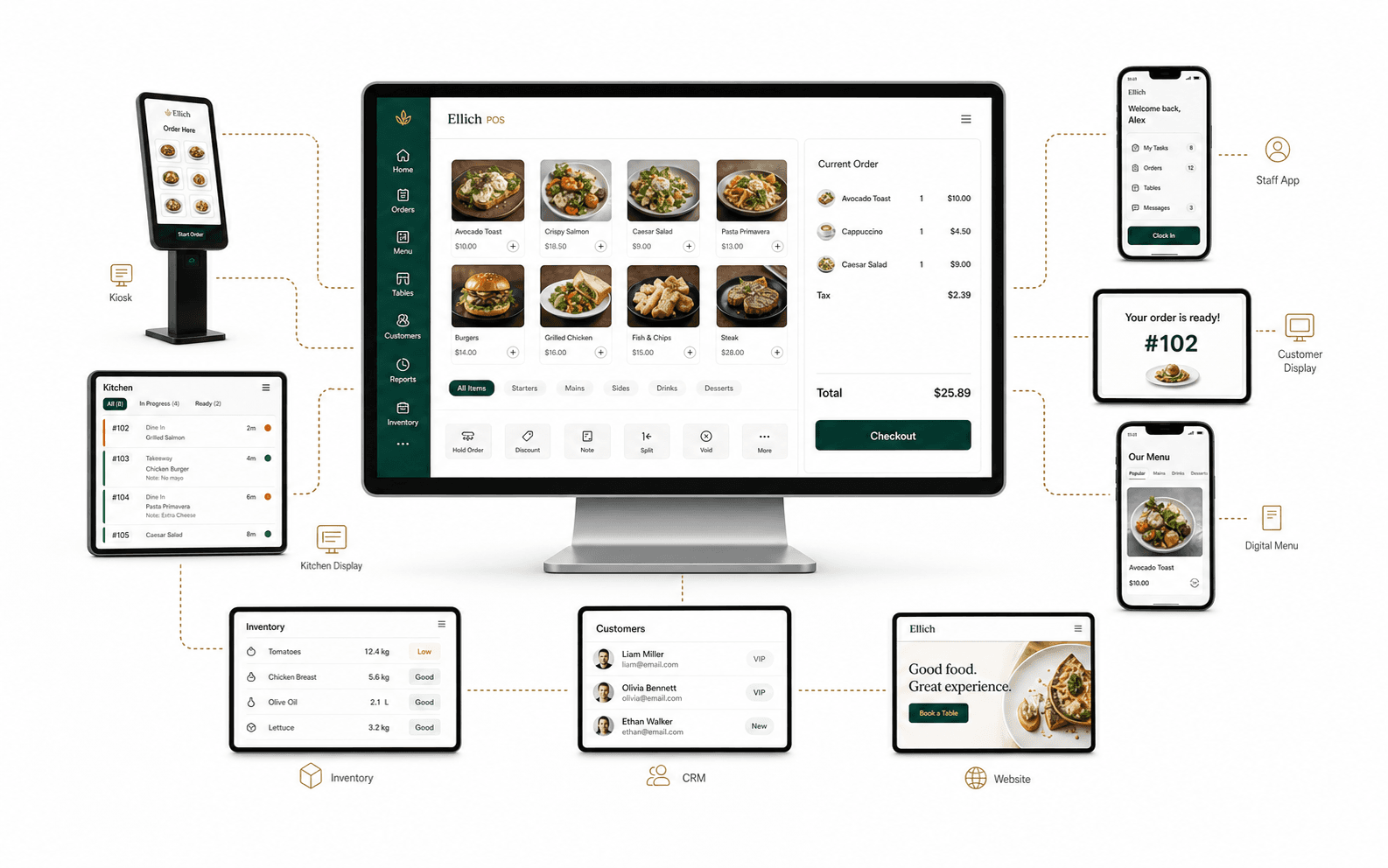
We build connected operating software for restaurants, cafes, gyms, studios, sports facilities, and hybrid businesses where customers, members, staff, bookings, sales, resources, reports, devices, and online experiences all affect the same operating day.
The platform page explains how the product is connected. This page explains what Ellich is trying to protect: a cleaner operating day for teams who have to sell, serve, stock, manage, and grow at the same time.
The product starts from live service, bookings, member visits, staff handoffs, sales, inventory, and closeout questions.
POS, kiosk, KDS, customer display, digital signage, staff app, and website surfaces stay separate but connected.
Reports, permissions, hardware state, and audit trails must make the business easier to trust.
Each role gets the right workspace without forcing everyone through the same dashboard.
Ellich is not one generic admin shell. The suite is organized around the distinct surfaces a store needs every day.

POS and payments
Fast checkout, orders, receipts, payments, and sales visibility for busy stores.

Bookings, waitlist, and guest care
Start with Reservations on its own, then connect website booking, the host stand, POS, and CRM when your operation needs more.

Self-order Kiosk, KDS & Digital Signage
Move every order from guest screen to kitchen, pickup, and store display without breaking the flow.

Inventory and catalog
Products, menus, modifiers, recipes, stock checks, and inventory control in one place.

CRM and loyalty
Customer profiles, loyalty, gift cards, packages, and campaign tools for repeat visits.

Scheduling & Employee Management
Connect employee profiles, schedules, availability, time off, attendance, tasks, training, and approvals from planning to the employee app.

Website and domains
Restaurant and Fitness storefront pages, subdomains, custom domains, and online presence.
These are the standards that should show up in the product, the help center, and every rollout plan.
Keep each industry experience connected to shared customer, workforce, commerce, reservation, and reporting capabilities.
Treat reporting as a first-class product surface, not an afterthought.
Keep public websites, device screens, staff tools, and admin workspaces tenant-aware.
Separate kiosk, POS, customer display, and digital signage so each module keeps its real purpose.
Design for one location first, then grow into company-owned multi-location operations.
Document launch, support, and troubleshooting paths as carefully as the product UI.
That is the bar for the public site, the product dashboards, and the resources operators use when the store is already moving.